Welcome to Changzhou Tenjan Steel Tube Co., Ltd
Sunny@tenjan.com



Working with steel pipe standards across different regions taught me something early on: the specifications matter far more than most people realize until something goes wrong. These aren’t just bureaucratic requirements. They define whether a hydraulic system holds under pressure, whether a boiler tube survives another decade of thermal cycling, or whether an OEM’s component passes certification the first time. For manufacturers and engineers sourcing globally, knowing how ASTM, EN, DIN, and JIS differ—and where they overlap—separates successful projects from expensive failures.
Steel pipes move through global supply chains under several major standards, each shaped by the industrial history and regulatory philosophy of its region. ASTM, EN, DIN, and JIS cover similar ground—chemical composition, mechanical properties, testing methods, dimensional tolerances—but they approach these requirements differently.
ASTM standards dominate North American markets. They emphasize material properties and testing protocols with a practical, application-focused structure. ASTM A519 covers seamless carbon and alloy steel mechanical tubing. ASTM A179 specifies seamless cold-drawn low-carbon steel tubes for heat exchangers and condensers. The naming convention uses a letter followed by numbers: A53, A106, A335.
EN standards, developed by the European Committee for Standardization, take a more performance-based approach. EN 10297-1 covers seamless steel tubes for mechanical and general engineering purposes. EN10305-1 specifies precision cold-drawn steel pipes where dimensional accuracy becomes critical. The European system uses numerical designations like EN 10210 or EN 10216.
DIN standards from Germany carry a reputation for precision and exhaustive detail. DIN 2391 remains a benchmark for precision seamless cold-drawn steel pipes. DIN 17175 addresses steel pipes for high-temperature applications in boiler and heat exchange systems. German standards often incorporate material numbers alongside application codes.
JIS standards from Japan have earned global recognition for quality and specific technical requirements. JIS G3445 defines carbon steel tubes for machine structural purposes. JIS G3461 specifies carbon steel tubes for boiler and heat exchanger applications. The JIS system uses “G” followed by numbers for steel products.
These standards share common objectives—safety, reliability, interchangeability—but their specific requirements for material grades, manufacturing processes, and testing can vary significantly. A STKM13A Steel Tubes or S45C Steel Tubes under JIS will have different chemical and mechanical property requirements than an equivalent grade under EN or ASTM. The carbon content in 1020 Steel Pipe under ASTM differs from how a similar grade appears in EN specifications, leading to variations in mechanical properties that matter for the final application.
The differences show up in nomenclature, testing requirements, material grades, and application focus. ASTM uses numerical designations preceded by “A” for steel products. EN uses a purely numerical system. DIN incorporates material numbers and application codes. JIS uses “G” followed by numbers. Testing protocols differ too—impact testing temperatures, hydrostatic test pressures, and acceptance criteria vary between systems. ASTM tends toward general mechanical and pressure applications. EN focuses on structural and pressure equipment. DIN emphasizes precision and general engineering. JIS concentrates on machine structural and boiler applications.
The standard you specify directly affects whether a component performs safely or fails under load. Different industries have developed preferences based on decades of operational experience.
Automotive manufacturing demands precision and strength simultaneously. Tubes for chassis components, hydraulic lines, and exhaust systems often follow EN 10305-1 for precision cold-drawn tubes or specific ASTM A519 grades for mechanical tubing. 25CrMo4 Steel Pipe and 4130 Seamless Pipe appear frequently in demanding automotive parts because of their hardenability and high-temperature strength. These chromium-molybdenum alloys respond well to heat treatment and maintain their properties under cyclic loading.
Hydraulic systems operate under pressures that would rupture ordinary pipe. They need tubes with exceptional burst strength and fatigue resistance. DIN 2391 for precision seamless tubes and ASTM A179 for seamless cold-drawn low-carbon steel tubes are common specifications. The cold-drawing process improves both dimensional consistency and surface finish, which matters for sealing and flow characteristics.
High-pressure boilers and heat exchangers face extreme temperatures and pressures continuously. DIN 17175 Steel Pipe and ASTM A192 exist specifically for these severe environments. The standards mandate stringent material compositions and testing because failure in these applications can be catastrophic. Creep resistance, oxidation behavior, and long-term stability under thermal cycling all factor into the specifications.
Construction machinery—excavators, cranes, loaders—uses steel tubes for both structural members and hydraulic power transmission. ST52 Steel Pipe and Q355B Steel Pipe are preferred for their combination of strength and weldability. These high-strength low-alloy structural steels allow designers to reduce weight while maintaining load capacity.
OEMs across industries rely on specific standards to ensure component compatibility and predictable performance. An agricultural machinery manufacturer might specify STKM11A Steel Pipes or STKM13A Steel Tubes for machine structural purposes, knowing that any qualified supplier meeting the JIS specification will deliver consistent quality.
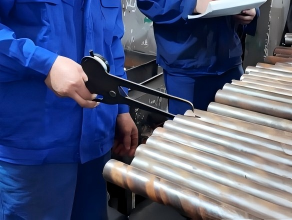
Quality and compliance involve more than paperwork. They require systematic processes and verification at multiple stages.
ISO 9001 certification establishes the foundation—a documented quality management system that covers everything from incoming material inspection to final product release. This certification demonstrates that a manufacturer has processes in place to consistently meet customer and regulatory requirements. Beyond ISO 9001, product-specific certifications tied to particular standards become important. PED certification for European pressure equipment, for example, adds another layer of verification.
Third-party audits validate these certifications independently. They catch gaps between documented procedures and actual practice. For OEMs sourcing globally, these audits provide confidence that a supplier’s claims match reality.
Testing methods verify material integrity directly. Positive Material Identification uses spectroscopic techniques to confirm the chemical composition of each alloy matches the specified grade. This prevents material mix-ups that could compromise performance—a real risk when multiple grades move through the same production facility. Non-Destructive Testing methods including ultrasonic testing, eddy current testing, and magnetic particle inspection detect internal and surface flaws without damaging the material. These tests confirm structural integrity and verify that defect levels stay within specified limits.
When producing Seamless Carbon Steel Tubes for high-pressure applications, extensive NDT ensures no hidden defects exist that could initiate failure under load. PMI verifies that the alloy composition of Seamless Alloy Steel Tubes meets exact specifications for the intended use. These checks go beyond compliance—they guarantee that every tube will perform as expected in service.
ISO 9001 certification is the baseline that every serious manufacturer needs. Beyond that, product-specific certifications relevant to the OEM’s industry become important: IATF 16949 for automotive, ASME for pressure vessels, PED for European pressure equipment. Many OEMs also require third-party audits and certifications for specific processes or materials. These certifications collectively demonstrate a manufacturer’s ability to deliver compliant, high-quality products consistently.
Modern engineering frequently requires tubes that go beyond standard round profiles. Meeting these needs while maintaining compliance with steel pipe international standards requires advanced manufacturing capabilities.
Custom-shaped tubes including Square Steel Tube Specifications, rectangular, and Hexagonal Steel Pipes&Tubes serve specific functional purposes. Octagonal Steel Pipes&Tubes and Triangle Steel Pipes & Tubes optimize space, improve structural efficiency, or facilitate particular assembly requirements. These aren’t aesthetic choices—they solve engineering problems that round tubes cannot.
Cold drawing makes precision possible for these specialized profiles. The process refines dimensional accuracy, enhances surface finish, and improves mechanical properties through work hardening. Cold drawing allows manufacturers to meet tight tolerances specified in DIN 2391 or EN 10305 even for non-circular cross-sections.
Consider an automotive OEM requiring a custom-shaped tube for a structural component. The tube must fit a confined space while possessing specific strength and ductility. Cold-drawing expertise produces Special-Shaped Alloy Steel Tubes or Special-Shaped Carbon Steel Tubes meeting exact dimensional and mechanical property requirements of the relevant ASTM or EN standard. This precision ensures the component performs reliably under operational stresses. The ability to customize while maintaining compliance distinguishes advanced steel tube manufacturing from basic production.
Selecting the right steel tube supplier affects project success, safety, and cost more than most procurement decisions. It requires evaluating capabilities beyond basic product specifications.
Full process control matters. A supplier managing every stage from raw material sourcing to finished product ensures consistent quality and traceability. Vertical integration allows tight control over cold drawing and cold rolling processes to produce Precision Pipe&tube meeting exact specifications. This control becomes particularly important for products like 1035 Seamless Pipe or S235JR Seamless Pipe where material consistency determines performance.
Deep expertise in steel pipe international standards is non-negotiable. A manufacturer should understand ASTM, EN, DIN, and JIS thoroughly—their nuances and how they apply to specific applications. They should guide material selection, whether the application calls for ASTM A106 Gr.B Steel Pipe for high-temperature service or 4140 Steel Pipe for its combination of strength and toughness.
A supplier’s commitment to quality shows in their certifications and testing protocols. ISO-certified facilities with robust PMI and NDT inspection systems provide assurance that steel tubes will perform as expected in demanding environments. Ask about testing frequency, equipment calibration, and how they handle non-conforming material.
Steel pipe international standards dictate the precise material grade, wall thickness, and required testing for high-pressure applications. Standards like ASTM A192 or DIN 17175 specify minimum tensile strength, yield strength, and elongation along with chemical composition limits to ensure the material withstands internal pressure and temperature. They mandate rigorous testing—hydrostatic or eddy current tests—to verify pipe integrity. Adherence to these standards prevents catastrophic failures, ensures operational safety, and maximizes the lifespan of high-pressure systems.
Steel pipe international standards exist because failures in critical applications cost lives and money. ASTM, EN, DIN, and JIS each bring different strengths to material specification, and understanding their requirements prevents costly mistakes in procurement and engineering. From high-pressure boilers to automotive components, the right standard ensures materials perform as expected. Rigorous quality control, proper certifications, and comprehensive testing separate reliable suppliers from those who cut corners. Even custom geometries and specialized cold-drawn profiles must meet these global benchmarks. Standard adherence isn’t bureaucratic overhead—it’s the foundation of quality, safety, and project success in global manufacturing.
For over two decades, Changzhou Tenjan Steel Tube Co.,Ltd has been at the forefront of precision steel tubing, delivering vertically integrated manufacturing solutions compliant with the most stringent international standards including ASTM, EN, DIN, and JIS. Whether your project demands seamless tubes for high-pressure boilers, custom-shaped profiles for automotive applications, or specialized cold-drawn tubes, our ISO-certified processes, comprehensive NDT/PMI inspections, and full process control ensure unparalleled material integrity and performance. Connect with our experts today to discuss your specific requirements and discover how Tenjan can be your trusted global partner for high-precision steel tubing solutions. Email: Sunny@tenjan.com | Tel: +86 51988789990 | WhatsApp: +86 13401309791| Tel: +86 51988789990 | WhatsApp: +86 13401309791
Understanding diverse steel pipe international standards like ASTM, EN, DIN, and JIS matters because each standard dictates specific material composition, mechanical properties, testing requirements, and application suitability. Non-compliance leads to failures, costly rework, and legal exposure. For critical engineering projects—particularly in high-pressure or safety-sensitive environments—adherence to the correct standard ensures material integrity, operational safety, and long-term performance.
Cold drawing refines dimensional accuracy, surface finish, and mechanical properties in ways that directly affect compliance. Standards like DIN 2391 Steel Pipe or EN 10305 specify tight tolerances and enhanced surface quality achievable through cold drawing. The process allows manufacturers to meet stringent requirements for precision steel tubing used in hydraulics, automotive, and other high-precision applications where standard compliance depends on dimensional consistency.
Non-Destructive Testing and Positive Material Identification are essential for compliance verification. NDT methods detect internal and surface flaws without damaging the material, confirming structural integrity as required by standards. PMI confirms the exact chemical composition matches the specified grade in standards like ASTM A335 or EN 10216. Together, these inspections guarantee materials meet rigorous quality and safety benchmarks, preventing mix-ups and ensuring performance in demanding applications.



Home Product Capabilities Case Studies Blogs About Get a Quote
Pipe & Tube Manufacturing Process Shapes & Profiles Pipes & Tubes Material Standard Steel Pipes & Tube Rebar Couplers Cold Drawn Steel Profiles & Bars
Oil & Petrochemical Industry Automotive & Motorcycle Components Mechanical Engineering Components Mining Construction Support Structures High-Pressure Boiler System Construction Machinery Geological Drilling Agricultural Machinery Parts Industrial Fluid Transfer Systems


© 2024 Changzhou Tenjan Steel Tube Co., Ltd All rights reserved. Privacy StatementTerms-ConditionsSitemap