Welcome to Changzhou Tenjan Steel Tube Co., Ltd
Sunny@tenjan.com



Ships demand materials that can take a beating and keep performing. Saltwater never stops attacking, vibrations run through every weld, and temperatures swing from freezing to scorching depending on where the vessel operates. Steel tubes sit at the heart of these challenges—they carry hydraulic fluid, handle exhaust gases, support structural loads, and contain high-pressure steam. Getting the material wrong means corrosion, cracking, or outright failure. Getting it right means decades of reliable service. The difference comes down to how the steel is made, what standards it meets, and whether the supplier actually understands what marine environments do to metal over time.
Saltwater is relentless. It attacks steel through electrochemical reactions that never pause, eating away at surfaces and working into any microscopic flaw. But corrosion is only part of the story. Waves create cyclic loading that fatigues metal over thousands of repetitions. Engine vibrations add their own stress patterns. Temperature changes cause expansion and contraction that stress joints and connections.
A steel tube in a ship’s hydraulic system might experience hundreds of pressure cycles daily while simultaneously fighting off chloride ions trying to pit its surface. Boiler tubes face even harsher conditions—high temperatures accelerate corrosion rates while internal pressure tests material strength constantly.
| Stressor | Material Requirement | Impact on Performance |
|---|---|---|
| Saltwater Corrosion | High Corrosion Resistance | Material degradation, structural failure |
| Dynamic Loads | Excellent Fatigue Resistance | Cracking, component failure |
| Temperature Fluctuations | Thermal Stability | Material expansion/contraction, stress |
| High Pressure | High Burst Strength | Catastrophic rupture |
| Abrasion/Erosion | Wear Resistance | Wall thinning, leakage |
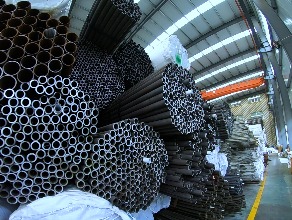
Welds create discontinuities. Even the best welding introduces a heat-affected zone where the metal’s grain structure changes, potentially creating a weak point under cyclic loading. Seamless steel tubes eliminate this problem entirely—the tube wall is uniform throughout, with no seam to fail.
Cold drawing takes things further. The process pulls the tube through a die at room temperature, which work-hardens the steel and refines its grain structure. The result is higher yield strength, better dimensional accuracy, and a smoother surface finish. For marine grade applications where hydraulic systems operate at thousands of PSI or boiler tubes contain superheated steam, these improvements translate directly to safety margins.
The absence of welds means seamless tubes have consistent strength around their entire circumference. No weak points exist where fatigue cracks typically initiate. Cold drawing adds another layer of reliability by increasing yield strength through controlled deformation of the steel’s crystalline structure. This work hardening makes the material more resistant to the cyclic stresses that cause fatigue failure in marine applications. The combination gives naval architects confidence that the tube will perform as calculated, not fail prematurely at an unexpected location.
International standards for shipbuilding steel tubes aren’t bureaucratic paperwork—they represent decades of accumulated knowledge about what works and what fails. When a tube is certified to ASTM A106 Gr.B Steel Pipe, that certification carries specific meaning about chemical composition, mechanical properties, and testing requirements.
Material certification matters because ships operate globally. A vessel built in Asia might be repaired in Europe using tubes sourced from North America. Without common standards, there’s no guarantee that replacement parts will perform like the originals. Positive Material Identification (PMI) testing verifies that the steel actually contains what the paperwork claims. Non-Destructive Testing (NDT) catches internal flaws that visual inspection would miss.
Several major standards apply depending on the specific application. ASTM A106 covers seamless carbon steel pipe for high-temperature service—the go-to specification for steam lines and high-pressure piping. EN 10216 addresses seamless steel tubes for pressure purposes across European applications. JIS G3454 specifies carbon steel pipes for pressure service in Japanese-built vessels, while JIS G3461 Steel Pipe covers boiler and heat exchanger tubes specifically. DIN 2391 sets requirements for precision seamless cold-drawn tubes used in hydraulic systems where dimensional accuracy is critical.
| Standard | Description | Common Applications in Shipbuilding |
|---|---|---|
| ASTM A106 | Seamless Carbon Steel Pipe for High-Temperature Service | High-pressure piping, steam lines |
| EN 10216 | Seamless Steel Tubes for Pressure Purposes | Hydraulic lines, structural components |
| DIN 2391 | Precision Seamless Cold-Drawn Steel Tubes | Precision hydraulic systems, control lines |
| JIS G3461 | Carbon Steel Tubes for Boiler and Heat Exchanger | Marine boilers, heat exchangers, exhaust systems |
| JIS G3445 | Carbon Steel Tubes for Machine Structural Purposes | Structural frameworks, machinery components |
Modern vessel construction uses steel tubes in applications most passengers never see. Hydraulic systems in ships depend on precision cold-drawn tubes to move fluid reliably at pressures that would burst inferior materials. These systems control everything from steering gear to cargo handling equipment.
Boiler tubes operate in some of the harshest conditions aboard—high temperatures, high pressures, and constant thermal cycling as the vessel’s power demands fluctuate. Ship exhaust systems route hot, corrosive gases from engines to atmosphere, requiring tubes that resist both heat and chemical attack.
Structural frameworks incorporate steel tubes where strength-to-weight ratios matter. Machinery mounts, handrails, and support structures all rely on tubes that meet specific mechanical requirements. Even specialized OEM shipbuilding parts often start as custom steel profiles shaped to fit unique design requirements.
Naval architects sometimes need shapes that don’t exist in standard catalogs. A structural member might require a hexagonal cross-section to fit a specific space. A machinery mount might need a rectangular tube with precise wall thickness to handle calculated loads.
Cold drawing makes these custom shapes possible. The process can produce square, rectangular, hexagonal steel pipes & tubes, and more complex geometries while maintaining the mechanical properties that marine applications demand. The key is working with a manufacturer who understands both the forming process and the end application—someone who can advise when a custom profile makes sense and when a standard shape would actually perform better.
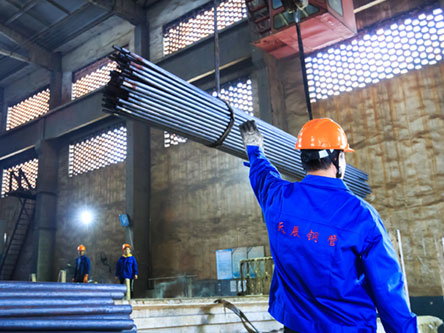
Choosing the right steel grade for a marine application involves balancing multiple factors. Corrosion resistance matters most in seawater-exposed applications, but it’s not the only consideration. Weldability affects how easily the tubes can be fabricated into complete systems. Yield strength determines how much load the tube can carry before permanent deformation occurs.
Impact toughness becomes critical in cold-water operations where steel can become brittle. A tube that performs perfectly in tropical waters might crack catastrophically in arctic conditions if the wrong grade was specified. Carbon steel tubing works well for many applications, but alloy steel tubing offers better performance when temperatures, pressures, or corrosion exposure exceed what carbon steel can handle.
Corrosion resistance tops the list because saltwater exposure is constant and unforgiving. Good weldability ensures that joints made during fabrication and repair will be as strong as the base metal. Adequate yield strength and ultimate tensile strength allow the tube to handle operational loads with appropriate safety margins. Impact toughness prevents brittle fracture under sudden loads—particularly important for vessels operating in cold regions where steel’s ductility decreases with temperature.
Changzhou Tenjan Steel Tube Co., Ltd has spent over two decades as a vertically integrated manufacturer focused on precision steel tubing for demanding applications. The company produces seamless and cold-drawn tubes along with custom profiles, all manufactured to comply with ASTM, EN, DIN, and JIS standards. ISO-certified quality control processes include PMI and NDT inspections that verify material integrity before shipment.
For shipbuilding projects requiring marine grade steel tubes, Tenjan offers the combination of manufacturing capability, standards compliance, and technical understanding that complex marine applications demand.
Contact for project consultation:
– Email: Sunny@tenjan.com
– Tel: +86 51988789990
– Phone/WhatsApp: +86 13401309791
Seamless tubes have no weld seam that could act as a stress concentrator or corrosion initiation point. The cold-drawn manufacturing process creates uniform wall thickness and enhanced mechanical properties throughout the tube. For boiler applications where failure means steam release at dangerous pressures, this structural consistency provides the safety margin that welded tubes cannot match. Compliance with ASTM and EN standards ensures the tubes meet specific requirements for high-temperature, high-pressure service.
Material selection starts with choosing steel grades known to resist saltwater corrosion. Verification happens through chemical analysis that confirms the steel contains the specified alloying elements. Positive Material Identification (PMI) testing uses portable spectrometers to verify composition on finished tubes. Non-Destructive Testing (NDT) methods like ultrasonic inspection detect internal flaws that could accelerate corrosion. These quality control steps confirm that the delivered tubes will perform as expected in marine environments.
Cold drawing technology can produce tubes in square, rectangular, hexagonal, and other non-circular cross-sections. The process maintains the mechanical property improvements of cold working while creating shapes that fit specific design requirements. Naval architects working on specialized structural components or machinery mounts can specify custom profiles that integrate precisely into their designs. The manufacturing process requires tooling development, so custom shapes work best for applications where standard profiles genuinely cannot meet the design requirements.



Home Product Capabilities Case Studies Blogs About Get a Quote
Pipe & Tube Manufacturing Process Shapes & Profiles Pipes & Tubes Material Standard Steel Pipes & Tube Rebar Couplers Cold Drawn Steel Profiles & Bars
Oil & Petrochemical Industry Automotive & Motorcycle Components Mechanical Engineering Components Mining Construction Support Structures High-Pressure Boiler System Construction Machinery Geological Drilling Agricultural Machinery Parts Industrial Fluid Transfer Systems


© 2024 Changzhou Tenjan Steel Tube Co., Ltd All rights reserved. Privacy StatementTerms-ConditionsSitemap